

 Español
 Pусский
 한국어
한국어 中文
中文


Fully Automatic Silicone Products Production Line
Fully Automatic Silicone Products Production Line A fully automatic silicone products production line is an advanced manufacturing system designed to produce high-quality silicone items with minimal human intervention. This integrated setup combines precision machinery, automated controls, and intelligent software to streamline the entire production process—from raw material handling to final packaging. Key Components 1. Material Preparation System The process begins with the automated feeding of liquid silicone rubber (LSR) or high-consistency rubber (HCR) into mixing units. Precise dosing systems ensure accurate ratios of base materials, catalysts, and additives. 2. Injection Molding or Compression Molding Machines Silicone is shaped using fully automated molding machines. Injection molding is ideal for complex, high-precision parts, while compression molding suits larger or simpler designs. Robotic arms handle mold loading, part ejection, and transfer to the next stage. 3. Curing and Vulcanization The molded silicone passes through temperature-controlled ovens or vulcanization tunnels to achieve optimal curing. Sensors monitor time and temperature to ensure consistent product quality. 4. Post-Processing Automation - Deflashing/Trimming: Robotic systems or laser trimmers remove excess material. - Surface Treatment: Automated plasma or coating systems enhance adhesion or texture. - Printing/Assembly: For multi-component products, robotic arms assemble parts or apply labels. 5. Quality Inspection Vision systems, laser scanners, and AI-powered cameras detect defects like air bubbles, dimensional inaccuracies, or surface flaws. Non-conforming products are automatically rejected. 6. Packaging and Sorting Finished products are counted, sorted, and packaged using automated pick-and-place robots. Conveyor systems transport them to palletizing stations for shipment. Advantages - Efficiency: Continuous operation reduces downtime and increases output. - Consistency: Automation minimizes human error, ensuring uniform product quality. - Cost-Effectiveness: Reduced labor costs and material waste improve profitability. - Flexibility: Quick mold and parameter adjustments allow for diverse product ranges. - Safety: Enclosed systems reduce worker exposure to high temperatures or chemicals. Applications Such production lines are used to manufacture medical devices (e.g., seals, tubing), kitchenware (baking molds, spatulas), automotive components (gaskets, vibration dampers), and consumer goods (phone cases, baby products). Conclusion A fully automatic silicone production line represents the future of manufacturing, combining speed, precision, and scalability. By integrating smart technologies, it meets the growing demand for high-performance silicone products across industries while maintaining strict quality and efficiency standards.
Products
Category:
-
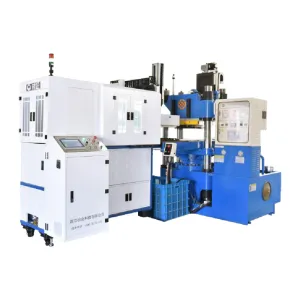
XQ (GT300S) H Cold Feed Front-mounted Standalone Unit Rubber Automation Equipment
Category: Rubber EquipmentBrowse number: 50Number:Release time: 2025-12-31 10:49:28Equipment Description:Rubber strip raw material is cold-fed into the feeding port. The entire process includes conveying and plasticizing, rubber blank loading, product vulcanization, demolding, finished product boxing, and mold cleaning. When integrated with a vulcanizing press, it forms a closed-loop process flow, enabling fully automated production.Application Scope:1. Rubber materials, including Nitrile (NBR), Hydrogenated Nitrile (HNBR), Fluoroelastomer (FKM), Ethylene Propylene Diene Monomer (EPDM), Natural Rubber (NR), Butyl Rubber (IIR), and Recycled Rubber.2. Suitable products: Rubber...
News
Category:
-
[FAQ]Silicone Automation Solutions for the Medical and Food Indus...
2025-12-27 14:06:07
Case
Category:
No search results found!
Video
Category:

Download
Category:
No search results found!
Job
Category:
No search results found!
Featured Products
No search results found!


