
 Español
 Pусский
 한국어
한국어 中文
中文


Fully Automatic Silicone Production Line
Fully Automatic Silicone Production Line A fully automatic silicone production line is an advanced manufacturing system designed to produce high-quality silicone products with minimal human intervention. This integrated system streamlines the entire production process, from raw material handling to final product packaging, ensuring efficiency, consistency, and precision. Key Components of the Production Line 1. Material Feeding System The process begins with the automatic feeding of silicone raw materials, including base polymers, crosslinkers, and additives. Precision dosing systems ensure accurate ratios, maintaining product quality and reducing material waste. 2. Mixing and Dispensing Unit The silicone mixture is prepared in an automated mixing unit, which homogenizes the components under controlled conditions. The mixed material is then dispensed into molds or extrusion systems with high accuracy, eliminating bubbles and inconsistencies. 3. Molding or Extrusion Process Depending on the product type, the silicone is either injected into molds (for solid products like gaskets or seals) or extruded (for tubes, profiles, or sheets). Automated molding machines apply precise temperature and pressure to cure the silicone efficiently. 4. Curing and Vulcanization The shaped silicone undergoes curing in a controlled environment, typically using heat or UV light. Fully automated ovens or conveyor systems ensure uniform curing, enhancing the material’s durability and elasticity. 5. Demolding and Trimming After curing, robotic arms or automated demolding systems remove the products from molds. Excess material is trimmed using precision cutting tools or laser systems for a clean finish. 6. Quality Inspection Vision inspection systems and sensors check for defects such as air bubbles, dimensional inaccuracies, or surface imperfections. Non-conforming products are automatically rejected, ensuring only high-quality items proceed. 7. Packaging and Labeling The final products are sorted and packaged automatically. Labeling machines apply product information, barcodes, or branding before packaging, ready for shipment. Advantages of a Fully Automatic System - High Efficiency: Reduces production time and labor costs. - Consistency: Eliminates human error, ensuring uniform product quality. - Scalability: Easily adjustable for different product specifications. - Reduced Waste: Precise material usage minimizes excess. - 24/7 Operation: Capable of continuous production with minimal downtime. Applications Fully automatic silicone production lines are widely used in industries such as medical devices, automotive, electronics, and consumer goods, where precision and reliability are critical. By integrating advanced robotics, AI-driven quality control, and smart manufacturing principles, these production lines represent the future of silicone manufacturing, delivering superior products with unmatched efficiency.
Products
Category:
-
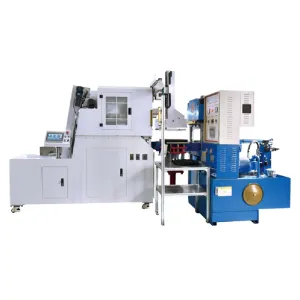
XQ (KL300S) H Granule Loading Type Rubber Automation Equipment
Category: Rubber EquipmentBrowse number: 38Number:Release time: 2025-12-31 10:40:23Equipment Description:1. Rubber granular raw material undergoes a complete process including conveying and loading, fixture placement, product vulcanization, product demolding, finished product boxing, and mold cleaning. When integrated with a vulcanizing press, it forms a closed-loop process flow, enabling fully automated production.2. Equipped with a 30 kg large granule hopper, an elevator conveys the raw material through reciprocating agitation-type transportation, preventing granules from sticking together and ensuring stable production.Application Scope:1. Rubber materials, including Nitr...
News
Category:
-
[Industry News]Top 5 Benefits of Automating Your Rubber Manufacturing Proce...
2025-12-27 13:51:50
Case
Category:
No search results found!
Video
Category:

Download
Category:
No search results found!
Job
Category:
No search results found!
Featured Products
No search results found!


